Departure 05h08 · Arrival 13h18. 9.4 km, +1,160 m, -1,150 m, 5h58 moving and 8h09 in total. It isn't the distance that makes the day huge, it's the terrain.
The night at Haut Asco wasn't the most restful. Our pitch on a slope clearly worked against us. But that morning, there was no question of dawdling: we knew exactly which stage lay ahead.
Off at 05h08. The light was starting to rise, day breaking over the ridges, and that moment gives you incredible energy. It isn't the difficulty doing the talking yet, it's the excitement. We were heading into one of the most iconic days of the north.
« even in a moment of pride, the GR20 doesn't forgive a lapse in attention. »
Historically, this section ran through the Cirque de la Solitude. The current route goes over the Pointe des Éboulis. On paper, that may sound more reassuring. On the ground, you quickly realise it isn't: the passage may be less technically committing, but physically it demands an enormous amount. The elevation piles up. The rock sets the pace. The stage never becomes easy going.
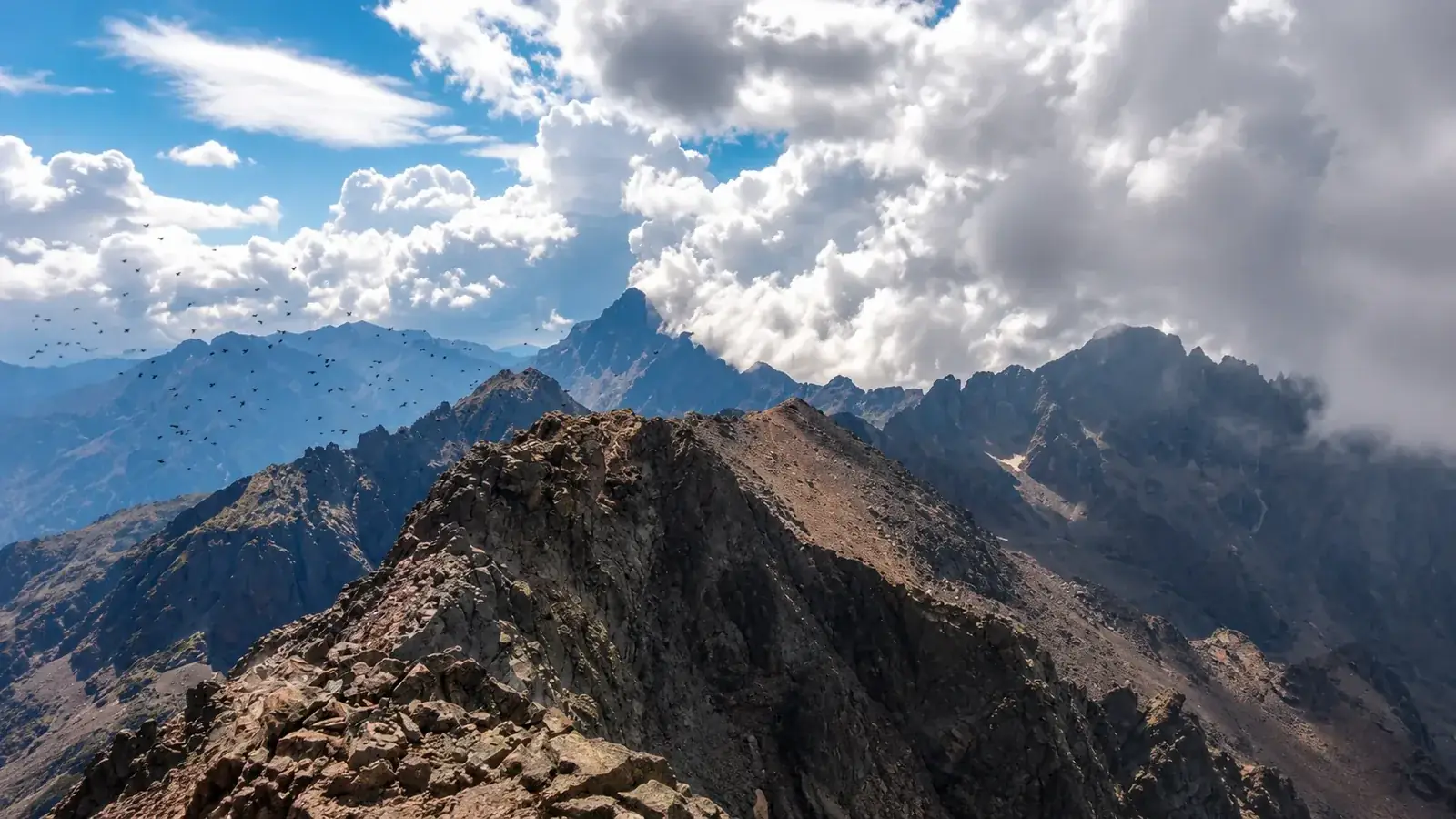
You have to climb, then climb some more. Boulders, scree fields, sections where your hands are there just to steady you. The legs work, the arms too. The pack weighs on you, your breathing settles into a rhythm. What makes this stage so particular is its lack of respite: you think you're nearing the high point, then a new slope appears. Behind one rise, another. A few snowfields add an almost alpine touch to the whole thing.
And yet something clicks into place. The body ends up accepting the effort. You move forward thinking less about the finish than about the next passage, the next foothold, the next breath. Maybe that's where I started to understand something important: on the GR20, you sometimes recover mentally not by stopping, but by finding a rhythm that lets you keep going.
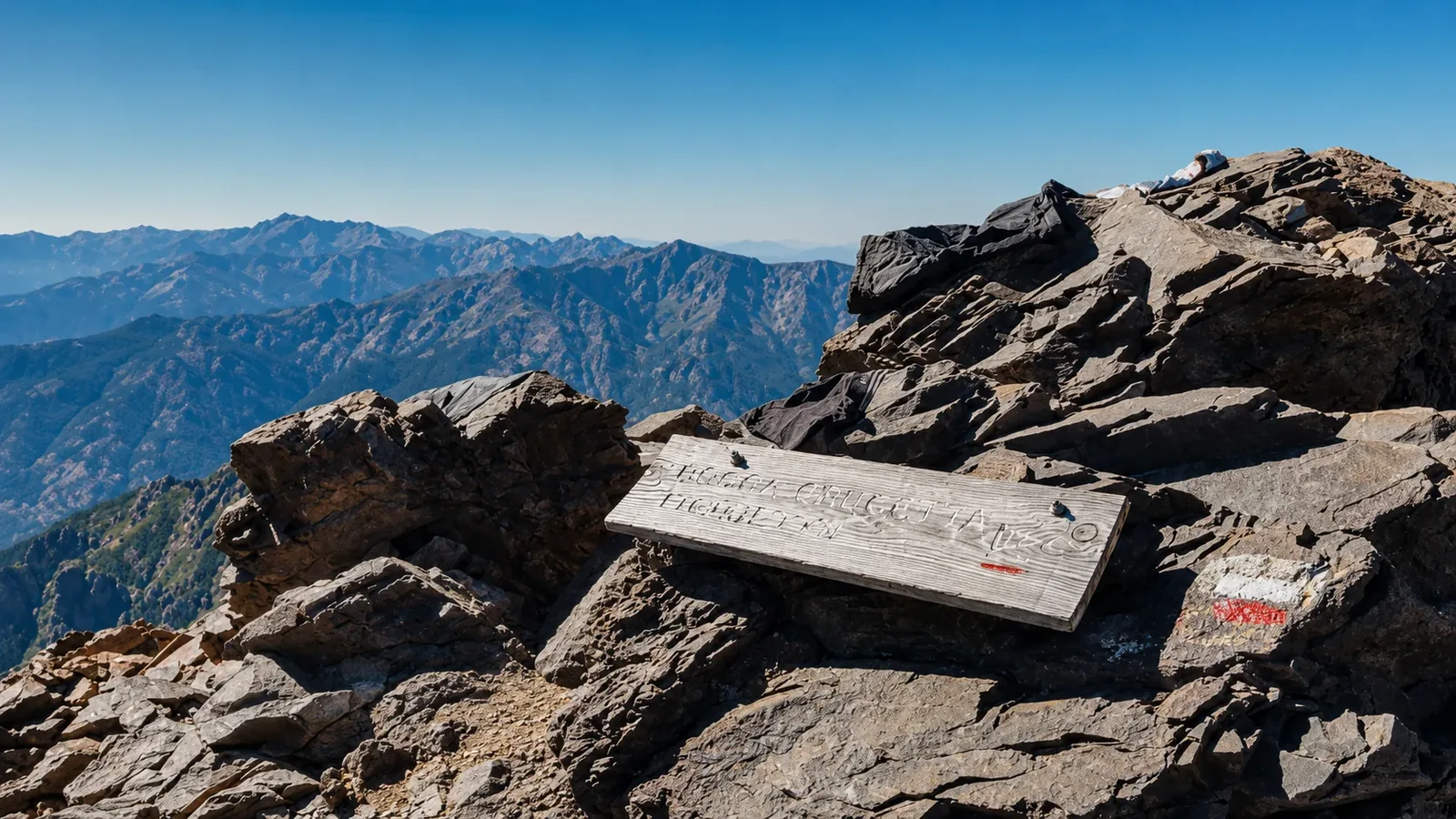
The Pointe des Éboulis isn't necessarily the most spectacular spot in terms of pure panorama. But symbolically, it carries real weight. A milestone. A marker. You've just crossed over something.
Right after the climb, the euphoria plays a nasty trick on me. I let my guard down for a second — and I sprain my ankle. In that instant, the doubt comes crashing in. I genuinely believe my GR20 has just ended right there. Luckily, Benjamin's anti-inflammatories work fast. More fright than harm, but the warning is clear: even in a moment of pride, the GR20 doesn't forgive a lapse in attention.
The descent opens up under a big sun. Beautiful scenery, but the terrain still demands that you stay serious. The scree fields don't disappear, the footing stays unstable, and the fatigue from the climb makes the descent edgy.
Our goal isn't to stop at Tighjettu: we keep going to the Bergerie de Ballone. Arriving there has the taste of a real reward. We're not simply happy to have arrived — we're happy to have ticked off a stage that was one of the big question marks of the north. A day like this isn't measured in kilometres or in elevation gain. It's measured in tension, in concentration, and in relief once the pack is set down.